The African Medicines Agency: Revolutionizing Product Registration Across Africa

The Role of the AMA in Streamlining African Product Registration

The African Medicines Agency (AMA) represents a transformative step in strengthening the regulation of medical products across the African continent. For decades, pharmaceutical manufacturers and distributors have faced fragmented regulatory requirements, lengthy approval timelines, and duplicated registration efforts across African markets. The AMA seeks to change this by promoting harmonized, transparent, and efficient regulatory systems that facilitate faster access to safe, effective, and high-quality health products.

As more African countries move toward adopting the AMA framework, understanding its roles, objectives, and practical benefits becomes essential for manufacturers, marketing authorization holders, and regulatory consultants. Equally important is the strategic support offered by expert consultancies—such as Alcare Consultancy—to help organizations navigate this evolving regulatory landscape.

The Mandate and Core Roles of the African Medicines Agency (AMA)

The AMA was established under the Treaty for the Establishment of the African Medicines Agency, endorsed by the African Union (AU). It builds upon earlier regional harmonization efforts such as the African Medicines Regulatory Harmonization (AMRH) initiative, which sought to align technical requirements among Regional Economic Communities (RECs) like EAC, SADC, and ECOWAS.

The AMA’s key roles include:

  1. Regulatory Harmonization Across Africa
    AMA promotes the use of common technical documents, standardized guidelines, and shared regulatory assessment tools. This allows companies to submit a single, harmonized dossier that can be used across multiple member states, significantly reducing redundancy.
  2. Capacity Building and Technical Support
    AMA strengthens the capabilities of National Medicines Regulatory Authorities (NMRAs) through training, technical assistance, and collaborative assessments. This ensures consistency in decision-making and improves the overall regulatory quality in Africa.
  3. Centralized Assessment and Mutual Recognition
    Under the AMA framework, a product approved by one recognized authority (or through joint assessment) can be mutually recognized by participating countries, speeding up market entry.
  4. Coordination of Pharmacovigilance and Safety Monitoring
    AMA enhances regional pharmacovigilance systems by establishing data-sharing mechanisms and coordinating post-market safety activities among NMRAs.
  5. Facilitating Access to Priority and Essential Medicines
    The agency prioritizes products addressing public health needs—including vaccines, antimalarials, antiretrovirals, and innovative therapies—ensuring timely access for African populations.

Benefits of the AMA-Driven Registration Pathway

The AMA framework offers several advantages to both regulators and the pharmaceutical industry:

  • Reduced Registration Timelines through joint reviews and shared assessments.
  • Lower Regulatory Costs due to single dossier submission and minimized duplication.
  • Improved Transparency with standardized evaluation criteria and digital submission platforms.
  • Expanded Market Access by enabling companies to reach multiple countries with one regulatory effort.
  • Stronger Post-Market Oversight through harmonized pharmacovigilance systems and collaborative inspections.

For businesses aiming to expand across Africa, AMA’s harmonized approach represents a strategic opportunity to accelerate product availability while ensuring regulatory compliance.

How Alcare Consultancy Helps Clients Optimize the AMA Registration Route

At Alcare Consultancy, we recognize that navigating the transition from fragmented national regulations to a harmonized AMA-driven system requires expert guidance and tailored strategy. Our services are designed to help clients leverage the efficiencies of the AMA framework while remaining compliant with both continental and national regulatory requirements.

  1. Regulatory Intelligence and Strategic Planning

Alcare Consultancy provides up-to-date insights on AMA developments, participating countries, and implementation timelines. We guide clients on how to align their registration strategies with current AMA frameworks and regional harmonization initiatives (e.g., EAC-MRH, SADC-MRH).

  1. Dossier Preparation and Harmonization Support

We assist in compiling Common Technical Dossiers (CTD) that meet AMA and local NMRA requirements. Our experts ensure that product data, labeling, and pharmacovigilance plans are optimized for submission under harmonized systems—reducing the need for reformatting or resubmission.

  1. Liaison with Regulatory Authorities

As part of our service, we act as a bridge between clients and regulatory authorities, ensuring clear communication, timely responses, and smooth follow-up throughout the joint review process.

  1. Pharmacovigilance and Post-Market Compliance

Alcare Consultancy provides Qualified Person for Pharmacovigilance (QPPV) services and establishes compliant safety monitoring systems in alignment with AMA’s post-authorization requirements. This ensures that safety data is properly managed across all participating markets.

  1. Training and Capacity Building

We offer targeted training for regulatory and quality teams to familiarize them with AMA procedures, documentation standards, and compliance expectations—empowering our clients to remain self-sufficient and compliant in the long term.

Looking Ahead: The Future of AMA and Its Impact on African Healthcare

As more African Union member states ratify the AMA treaty and operationalize their participation, the regulatory landscape in Africa is set to become more predictable, efficient, and innovation-friendly. This shift will not only accelerate the introduction of essential medicines but also encourage global manufacturers to invest in Africa’s healthcare ecosystem.

For organizations looking to register products across multiple African countries, early engagement with the AMA pathway—supported by expert regulatory partners like Alcare Consultancy—can result in faster approvals, wider market reach, and sustainable compliance.

Conclusion

The African Medicines Agency is ushering in a new era of regulatory collaboration and efficiency in Africa’s pharmaceutical sector. While the system is still evolving, forward-looking companies can already benefit from its harmonization goals by strategically planning their submissions and leveraging expert support.

Alcare Consultancy stands ready to assist manufacturers, importers, and distributors in optimizing their AMA registration journey—ensuring regulatory compliance, accelerating approvals, and contributing to better healthcare access across Africa.


 

Regulatory Strategy for Product Registrations: Building a Clear Path to Market

Regulatory Strategy for Product Registrations: Building a Clear Path to Market

In today’s competitive healthcare and consumer products industry, getting your product to market quickly—and compliantly—is essential. Whether you’re launching a pharmaceutical, medical device, cosmetic, or food supplement, navigating regulatory requirements can be complex and time-consuming. A well-defined regulatory strategy ensures that your product meets all legal requirements while minimizing delays, costs, and compliance risks.

What Is a Regulatory Strategy?

A regulatory strategy is a roadmap that defines how a product will meet all regulatory obligations from development to commercialization. It involves understanding the regulatory landscape of the target market, identifying applicable guidelines and standards, and planning the submission and approval process accordingly.

In Tanzania and across the East African region, agencies like the Tanzania Medicines and Medical Devices Authority (TMDA) and the Tanzania Bureau of Standards (TBS) regulate the safety, quality, and efficacy of health and consumer products. Each authority has specific requirements for documentation, testing, and inspection that must be met before a product can be marketed.

Key Elements of an Effective Regulatory Strategy

  1. Regulatory Assessment and Gap Analysis
    The first step is understanding what regulations apply to your product and identifying any data or documentation gaps. This includes reviewing formulations, manufacturing processes, and existing approvals.
  2. Product Classification
    Accurate classification determines which regulatory pathway to follow. Misclassification can lead to major delays or rejections.
  3. Data and Dossier Preparation
    Preparing a complete and compliant registration dossier is critical. This includes stability data, certificates of analysis, GMP certificates, and other supporting documents based on the product type.
  4. Submission Planning
    A timeline for submissions, including anticipated review periods, helps ensure efficient coordination between manufacturers and regulatory authorities.
  5. Regulatory Communication and Follow-up
    Continuous communication with regulatory agencies ensures timely clarification of queries, tracking of review progress, and fast resolution of issues that arise.
  6. Lifecycle Management
    Regulatory compliance doesn’t end with registration. Post-approval variations, renewals, and pharmacovigilance activities must be managed proactively to maintain authorization.

Challenges Companies Commonly Face

  • Incomplete or non-compliant documentation
  • Delays in obtaining regulatory certificates from manufacturers
  • Frequent regulatory updates and changing submission formats
  • Lack of in-house regulatory expertise
  • Costly re-submissions due to incorrect data or missing documents

These challenges often result in lost time, increased expenses, and delayed product launches.

How Alcare Consultancy Can Help

At Alcare Consultancy, we simplify the regulatory process for you. With in-depth knowledge of TMDA, TBS, and regional regulatory frameworks, we provide strategic and operational support to ensure your product meets all requirements efficiently.

Our Services Include:

  • Regulatory Strategy Development: Tailoring a clear roadmap for product registration and market entry.
  • Dossier Compilation & Submission: Preparing, reviewing, and submitting registration applications that comply with local and international standards.
  • Regulatory Liaison: Managing communications and follow-ups with TMDA, TBS, and other authorities on your behalf.
  • Post-Approval Support: Handling renewals, variations, and safety reporting obligations.
  • Training & Advisory: Empowering your team with knowledge of local regulations and compliance best practices.

Why Choose Alcare Consultancy

  • Experienced regulatory professionals with a proven track record in Tanzania and East Africa.
  • Comprehensive understanding of local regulatory pathways.
  • Transparent, result-driven, and client-focused service delivery.
  • Commitment to accelerating your market access while ensuring full compliance.

Conclusion

Developing a strong regulatory strategy is not just about compliance—it’s about creating a competitive advantage. With expert guidance from Alcare Consultancy, your product registration journey becomes smoother, faster, and strategically aligned with your business goals.

Let us help you turn regulatory complexity into regulatory confidence.


Regulatory Intelligence: The Cornerstone of Successful Product Registration

Regulatory Intelligence: The Cornerstone of Successful Product Registration

In the fast-evolving world of pharmaceuticals, medical devices, and consumer health products, regulatory intelligence (RI) has become more than just a support function — it’s a strategic tool. Whether you are launching a new medicine, registering a medical device, or expanding into new markets, having the right regulatory insights can make the difference between a smooth approval process and costly delays.

What Is Regulatory Intelligence?

Regulatory Intelligence refers to the systematic collection, analysis, and interpretation of information about current and emerging regulations, policies, guidelines, and enforcement trends that may impact the development, registration, and marketing of products.

In simple terms, it’s about staying ahead of regulatory changes — knowing what authorities require today and what they are likely to require tomorrow.

Why Regulatory Intelligence Matters in Product Registration

  1. Ensures Compliance and Reduces Risk
    Regulatory requirements vary across regions and are constantly changing. RI helps organizations stay compliant by providing up-to-date knowledge of regulatory expectations, minimizing the risk of non-compliance, delays, or product recalls.
  2. Supports Faster Market Entry
    With well-analyzed regulatory data, companies can design submission strategies that meet local authority expectations the first time — leading to faster approvals and earlier market access.
  3. Enhances Decision-Making
    Regulatory Intelligence provides actionable insights that help teams choose the best pathway for product registration — whether through full dossier submission, abridged applications, reliance mechanisms, or special access routes.
  4. Optimizes Resource Planning
    By anticipating regulatory challenges early, companies can allocate the right resources — time, budget, and personnel — to critical steps in the registration process.
  5. Improves Competitiveness
    Companies that invest in strong regulatory intelligence systems can respond faster to opportunities, such as tender requirements, regulatory harmonization initiatives, or new regional markets opening to certain product categories.

Key Components of Effective Regulatory Intelligence

To build a strong RI framework, organizations should focus on:

  • Monitoring Sources
    Constantly tracking updates from regulatory authorities (like TMDA, WHO, EMA, FDA, or TBS) and regional harmonization bodies (like EAC-MRH or SADC).
  • Data Analysis and Interpretation
    Turning raw information into meaningful insights by comparing regulatory expectations, identifying trends, and forecasting potential changes.
  • Information Sharing
    Disseminating insights across departments — from R&D to regulatory affairs and quality assurance — to ensure everyone is aligned with current requirements.
  • Documentation and Archiving
    Maintaining a well-organized repository of regulations, guidelines, and correspondences that can be easily referenced during future submissions or audits.

Regulatory Intelligence in Practice

Consider a company planning to register a vaccine in Tanzania. By leveraging regulatory intelligence, the company can:

  • Identify the most recent TMDA guidelines for vaccine registration.
  • Understand stability data requirements specific to climatic zones (e.g., Zone IVb).
  • Learn about waiver policies or reliance mechanisms for WHO-prequalified products.
  • Prepare documents that meet local dossier structure and labeling expectations.

This approach not only saves time but also strengthens the credibility of the submission package.

How Alcare Consultancy Can Help

At Alcare Consultancy, we recognize that effective regulatory intelligence is the foundation of every successful product registration. Our team continuously monitors and interprets regulatory updates from regional and global authorities to support clients in:

  • Product registration and renewal
  • Variation submissions and post-approval changes
  • Import and special permit applications
  • Compliance with pharmacovigilance and quality requirements

We translate complex regulatory requirements into practical, actionable strategies that ensure your products reach the market efficiently and remain compliant throughout their lifecycle.

Conclusion

In today’s dynamic regulatory landscape, regulatory intelligence is not optional — it’s essential. Companies that proactively integrate RI into their registration planning gain a significant advantage in speed, compliance, and strategic foresight.

By partnering with experienced regulatory professionals, businesses can turn regulatory challenges into opportunities for growth and innovation.


Authorization procedure for medicines with TMDA

Authorization Procedures

There are several different authorization procedures that a company may use to obtain a marketing authorization for a medicinal product depending on the consent of the company.

  • National Procedures
  • Harmonization and Collaborative Procedures

National Procedure

A company can submit an application for a marketing authorization directly to the TMDA if the company only wishes to market a medicine in Tanzania. The procedure for marketing authorization of medicinal product in Tanzania are described below: -

New Products

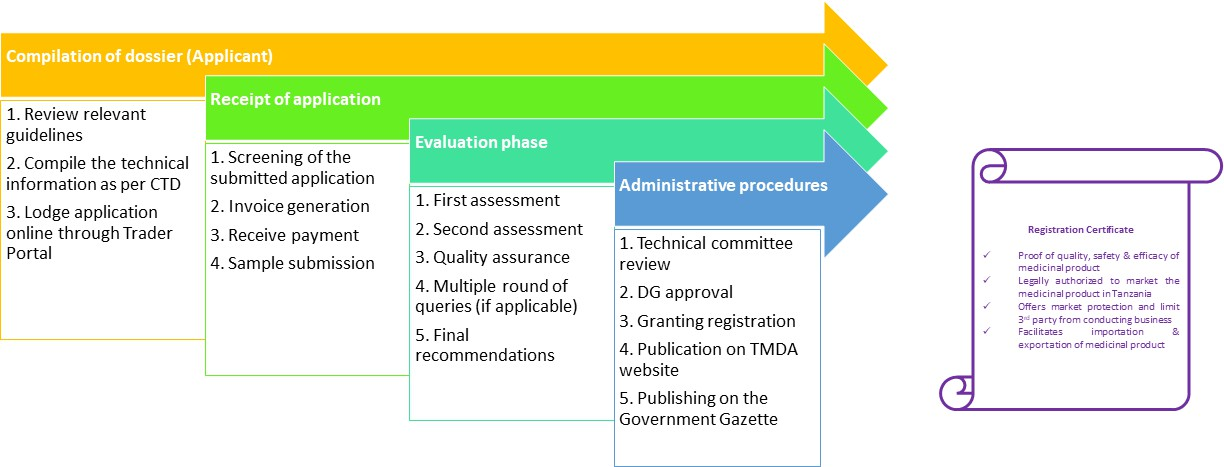
Authorizations to market new medicinal products are granted by the TMDA under the Tanzania Medicines and Medical Devices (Registration of Medicinal Products) Regulations, 2015. Authorization for a medicinal product is called marketing authorization. Details on the content of an application are outlined in the Registration of Medicinal Products Regulations and in product specific guidelines all of which are available on the The TMDA website (link to the guidelines). All applications have to be submitted in accordance with the CTD (Common Technical Document) format. Details on the format of the dossier are outlined in respective product guidelines

Process flow


Authorization of Variations

Information for applicants on the process and requirements for notification and approval of changes to the terms of a marketing authorization.

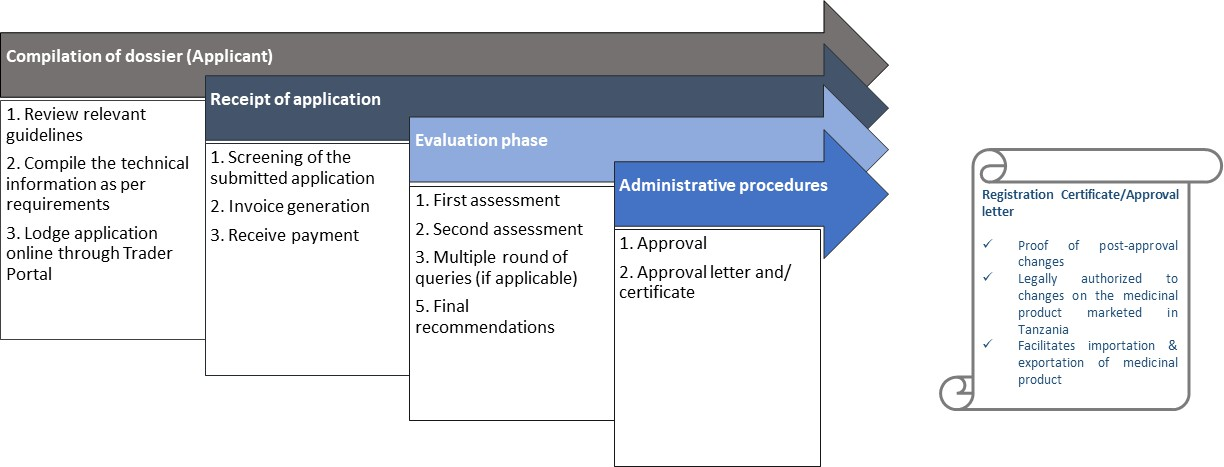
After a medicine has been authorised, the terms of the marketing authorization may subsequently be varied. The procedures around such variations are governed by Tanzania Medicines and Medical Devices (Registration of Medicinal Products) Regulations and in product specific variation guidelines all of which are available on the The TMDA website. Tanzania Medicines and Medical Devices (Registration of Medicinal Products) Regulations, 2015 extends the scope of the variation’s regulation to all marketing authorizations, human, herbal and veterinary, granted marketing authorization. Detailed procedural guidance on the classification, submission and processing of variations has been published by the product specific variation guideline

Process flow

Renewal applications

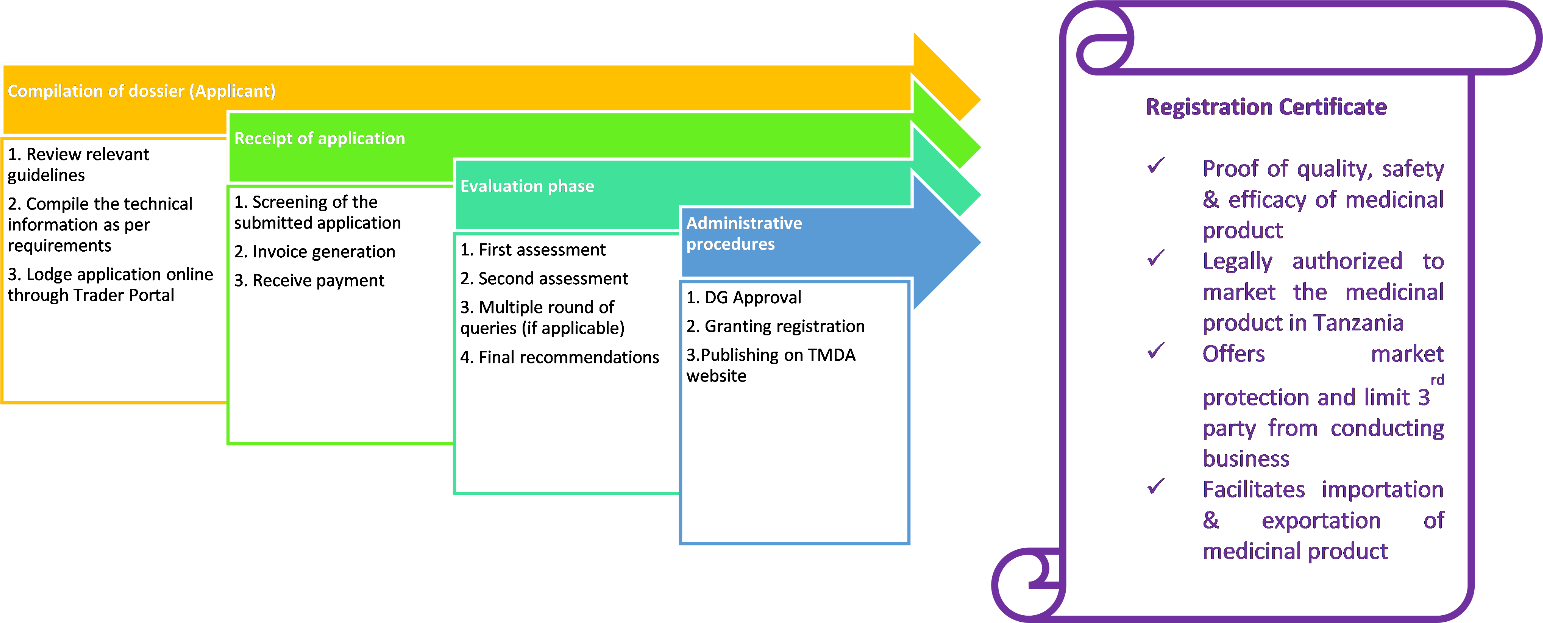
Marketing authorizations are valid for five years from the date of first issue. For the authorization to remain valid, it should be renewed at the end of this five year period.

Renewal applications should be submitted to the TMDA at least three (3) months before the expiry of the authorization, although earlier renewals are acceptable in order to facilitate a common renewal date for a range of products. Renewal applications should be accompanied by the Application form for renewal of a marketing authorization.

For more information on preparing renewal applications, please refer product specific guidelines all of which are available on the The TMDA website

Process flow